
Weekend Market Report-10/25/26
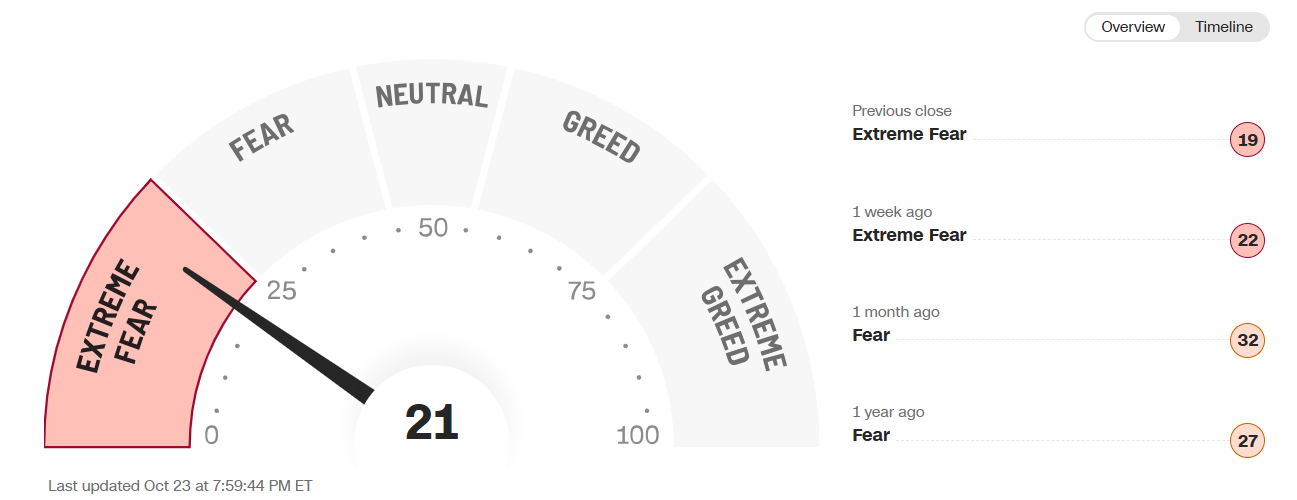
Weekly scorecard (week ending Oct 23, 2026)
S&P 500: −0.5% to 7,623.68 (second straight weekly loss)
Nasdaq: −0.7% to 25,955.34
Dow: +0.4% to 52,215.16 (third straight weekly gain, despite Friday’s −1.23% dump)
Russell 2000: +2.0% (clear outperformer)
Equal-weight S&P outperformed the cap-weighted index as money rotated out of mega-cap tech.
Main story: AI infrastructure spending anxiety. Meta’s report (and Thursday’s reaction) was the spark. They guided 2026 capex to $135–145B (raising the low end), reported negative free cash flow for the first time in the company’s public history, and floated a new non-voting share class to raise equity for the AI buildout. Meta dropped ~7% (worst day since July). That spilled into chips and the broader AI trade—Nasdaq −2.6% Thursday, SOX under pressure. Tech stabilized a bit Friday, but the damage was done.
Other drivers:
Oil ripped higher on escalating Middle East tension (Houthi attacks on Saudi energy infrastructure, Aramco HQ evacuation orders, Strait of Hormuz/vessel risks). Brent settled Friday at $116.72 (highest since late April), WTI at $103.27. Energy was one of the few bright spots and helped cushion the broader market.
Telecoms got hit on SpaceX wireless carrier reports.
The 10-year yield finished the week near 4.99% after some volatility (a safe-haven bid on the Thursday tech washout, then a rebound).
It felt like a classic “can the AI ROI justify the capex and financing needs?” reality check, with geopolitics adding an oil-driven inflation overlay. Breadth was better under the surface than the headline indices suggested.
Week ahead (Oct 26–30)
This is one of the biggest weeks of the year. Buckle up. Earnings blitz (the main event):
Wednesday after close: Microsoft and Alphabet (right after the Fed)
Thursday after close: Amazon
Also heavy: Visa, Coca-Cola, Boeing, Eli Lilly, Intel, Mastercard, Exxon, Chevron, and many others.
The market will be laser-focused on cloud growth, AI monetization vs. continued heavy capex, free cash flow, and any commentary on 2027 spending plans. After Meta’s reaction, any sign of softer monetization or even higher spending could re-ignite the same concerns. Strong beats + confident commentary on AI returns could stabilize or reverse the recent pressure.
Fed: FOMC decision Wednesday (Oct 28). Base case is a hold at the current 3.75–4.00% range after September’s hike. Odds of another hike this meeting are low (roughly 8–15% range in recent pricing). December remains more live. Watch Warsh’s press conference and any language around the path, inflation, and AI as a potential demand shock. No new Summary of Economic Projections this meeting.
Data:
Thursday: Advance Q3 GDP (seen around 3%) + September PCE inflation (core expected ~0.3% m/m).
Other: durable goods, consumer confidence, housing data.
Wild card: Oil and Middle East headlines. Further escalation could keep energy bid and pressure everything else via inflation expectations.
Bottom line: Last week was a rotation + AI-skepticism week, with oil as the offset. Next week is high-volatility earnings + Fed. The AI trade needs clean prints and credible monetization commentary from MSFT/GOOGL/AMZN to find its footing. Last week’s small-cap and equal-weight strength is a positive tell if it continues. Expect chop and big moves around the Wednesday/Thursday events.
The real deal……………
Hedge funds are getting absolutely crushed right now, and it helps explain why the stock market has been behaving so irrationally lately.
According to Goldman Sachs, global hedge funds just experienced one of their broadest daily declines since COVID. Fundamental long/short funds lost 1.4% on Thursday, while funds focused on technology, media, and telecommunications fell an average of 2.7%. More than two-thirds of hedge funds finished the day in the red. These numbers might not seem significant compared to individual stocks, but remember: hedge funds are supposed to manage risk. Many of these funds are designed to make money whether the market goes up or down, yet they’re getting hit on both sides of their trades.
So here’s what’s happening. Most hedge funds own stocks they believe will rise while betting against stocks they expect to fall. Normally, one side should offset losses on the other. But right now, their long positions are getting crushed as technology and AI stocks sell off, while some of their short positions are moving higher, forcing them to buy back shares at a loss. And this is where things get interesting. When hedge funds start losing significant money, they’re often forced to reduce their market exposure. That means selling positions, raising cash, and reducing leverage. The problem is that they don’t necessarily sell companies with deteriorating fundamentals. They often sell whatever they can sell quickly.
This can drag down even companies reporting strong earnings, growing revenue, and improving fundamentals simply because institutions need liquidity. We’ve been seeing this across semiconductors, memory, AI infrastructure, and other high-growth sectors. What’s even more interesting is how bearish hedge funds have become. Goldman Sachs reported that short exposure was approaching five-year highs, with short selling significantly outpacing long purchases. In other words, many institutional investors are positioning themselves for further declines.
But there’s another side to this. When too many investors are betting on the same outcome, even a small market recovery can trigger a significant reversal. If heavily shorted stocks start to recover, hedge funds may be forced to buy back shares to close their bearish positions. That buying pushes prices higher, potentially forcing even more funds to cover their shorts. Now, does this mean we’ve officially reached the bottom? Not necessarily. Forced selling can last longer than people expect, especially with leverage involved. But it’s important to understand that much of what we’re seeing right now isn’t necessarily driven by deteriorating company fundamentals. Much of it could be related to hedge fund positioning, leverage, and institutions being forced to reduce risk.
There’s a massive difference between a stock falling because its business is struggling and a stock falling because institutions are being forced to sell. That’s why I’m paying more attention to what these companies report than to what their stock prices do on any given day.
Key Events This Week:.
September New Home Sales data – Tuesday
October Fed Meeting and Rate Decision – Wednesday
MSFT, GOOGL, AMZN, INTC all report next week.
September PCE Inflation data – Thursday 5. US Q3 2026 GDP Data
Buckle up for one of the busiest weeks of the year.